
Driving in Guadalajara with a rental car is easier than it looks from the airplane window, as long as you arrive knowing three things: the speed limits set by Jalisco state law, how to enter a traffic circle, and which lanes you can never use. Your phone’s navigation app, mounted and hands-free, takes care of the rest.
This guide covers the rules that cost out-of-town drivers the most tickets, with the article of law behind each one and what it costs in 2026 pesos, plus a quick read on how the city’s big avenues behave.
Speed limits when driving in Guadalajara
Jalisco’s Mobility, Road Safety and Transportation Law sets the maximums in Article 124. They are lower than many visitors expect, especially on neighborhood streets. For reference, 30 km/h is about 19 mph, 50 km/h about 31 mph and 80 km/h about 50 mph.
| Type of road | Speed limit |
|---|---|
| Secondary and neighborhood streets | 30 km/h |
| Main avenues without controlled access | 50 km/h |
| Center lanes of controlled-access avenues | 80 km/h |
| Highways inside urban areas | 50 km/h |
| Highways outside urban areas | 80 km/h |
| Next to schools, hospitals and churches at opening and closing times | 10 km/h |
| Approaches to any intersection | 50 km/h |
The state’s traffic regulations add two details in Article 88. Where there is no sign, the limit is 50 km/h with no tolerance. Where a speed limit is posted, there is a 10 km/h tolerance.
Going more than 10 km/h over the posted limit carries a fine of 10 to 30 UMA, the unit Mexico uses to set fines (Article 363 of the law). With the 2026 UMA at 117.31 pesos, that is 1,173 to 3,519 MXN, roughly 65 to 195 USD.
Periférico, López Mateos and the big avenues
Almost any long drive across the metro area uses one of four roads. The Periférico loops around Guadalajara, Zapopan, Tlaquepaque and Tonalá. López Mateos runs south and becomes the highway to Colima. Avenida Vallarta heads west and connects with the road to Puerto Vallarta. Lázaro Cárdenas cuts across the city from east to west.
Several of them have center lanes and side lanes. The center lanes are for through traffic; to turn or exit you need to move to the side lanes early, because U-turns and on-ramps come up fast and are not always signed ahead.
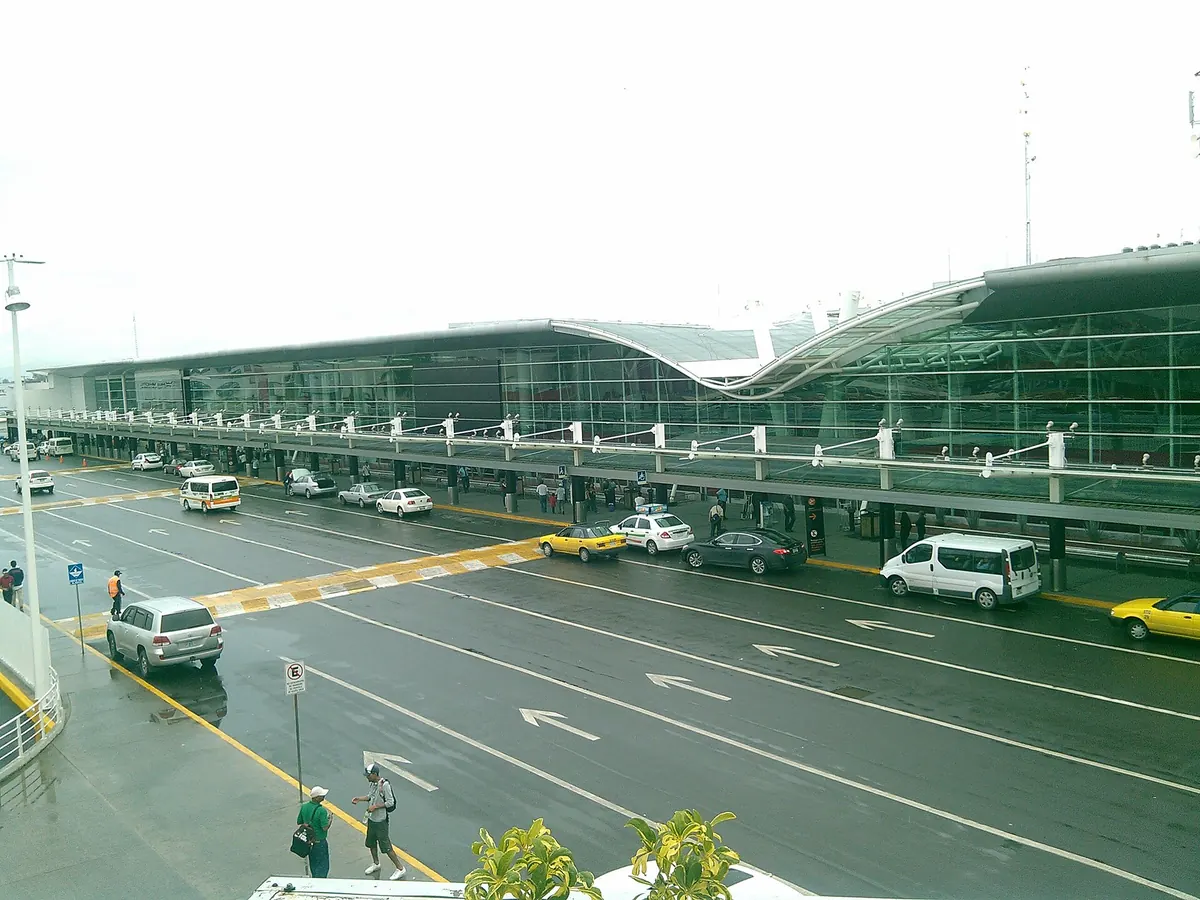
If you pick up the car at the airport, your first road will be the highway to Chapala, which reaches the southern Periférico in a few minutes. In the cooler months, check how fog at Guadalajara Airport can shift arrival times.
At rush hour these avenues fill up and a 20-minute trip can take twice as long. If you have a flight or a meeting, plan with the traffic your app shows for that time of day, not what you saw the night before.
How to drive through Guadalajara’s traffic circles
The city has large, busy traffic circles, known locally as glorietas: La Minerva, Los Niños Héroes and La Normal are the best known. Many have traffic lights, and in those you simply follow the signal.
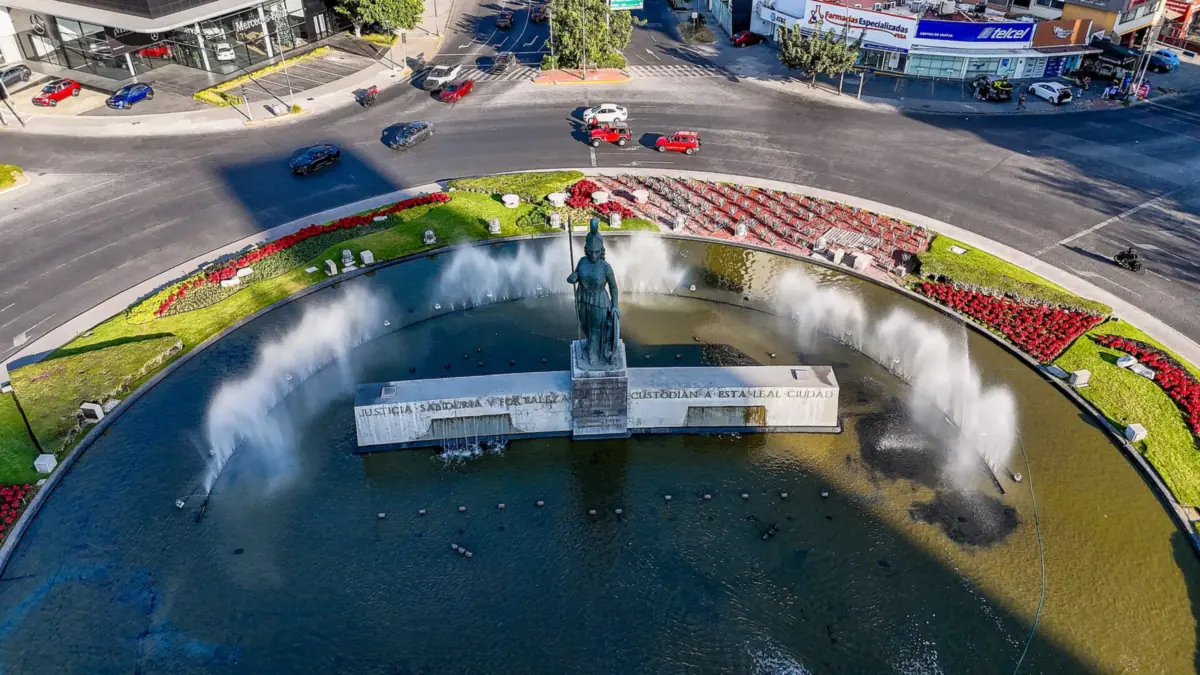
Where there is no light, Article 61 of the regulations applies: come to a full stop before entering and yield to vehicles already in the circle, and to pedestrians. Whoever is arriving waits; whoever is already inside keeps going.
In practice, enter on the right if you are taking the first or second exit, and use the inner lane only if you are going almost all the way around. Signal before you exit. If you miss your street, go around again instead of cutting across.
Mi Macro and Macrobús lanes: the most expensive ticket
The Mi Macro Periférico and the Macrobús on Calzada Independencia are bus rapid transit lines that run in dedicated lanes separated by bollards or curbs. Private cars are banned from them, even to pass or to wait for a turn, under Article 62 of the regulations.
Driving or parking in those lanes, or crossing them against the signs, carries a fine of 150 to 200 UMA (Article 374 of the law). In 2026 that comes to 17,597 to 23,462 MXN, roughly 975 to 1,300 USD. No other common traffic violation costs that much.
Other Jalisco traffic rules worth knowing
- Phones. No talking, reading or texting while driving unless you use a hands-free setup (Article 124 of the law).
- Seat belts. Required for the driver and every passenger, back seat included (Article 61 of the regulations).
- Alcohol. The limit for driving a car is 0.25 milligrams per liter of exhaled air, and sobriety checkpoints run year-round (Article 125 of the law).
- No turn on red. Turning right or left on red is prohibited unless a sign allows it (Article 61 of the regulations). Don’t assume the U.S. rule applies.
- Left turns on avenues. Not allowed on avenues, boulevards and expressways except where a sign or a dedicated lane permits it.
Traffic tickets in a rental car in Guadalajara
Camera tickets and other fines are issued to the license plate, and the plate is registered to the rental company. That is why a notice can show up weeks after you returned the car. Veico’s rental terms, for example, state that the customer pays any fines incurred during the rental, charged to their credit card at return or later, plus a 1,500 MXN (about 82 USD) processing fee.
That same credit card holds the car rental security deposit. Across the group’s rental companies the terms are the same: credit card only, a prepayment when you book and the balance when the rental starts; unguaranteed rentals are not accepted. Veico is an affordable option with no hidden fees if you want to compare prices before you land.
And if you would rather not drive at all, say on a business trip or with a large group, Rapivan runs private transfers with a driver from the airport.
Before you hit the highway out of Guadalajara
The exits are easy once you know which avenue leads to each one. For the coast, the Guadalajara to Puerto Vallarta drive guide (in Spanish) and the Guadalajara to Manzanillo driving guide list tolls and times. Toward the Bajío, see the Guadalajara to Querétaro drive.
If there are five or more of you, look at SUV and van rental in Guadalajara: on the highway you will be glad of the luggage space.
Driving in Guadalajara: frequently asked questions
Is driving in Guadalajara hard?
Not for anyone who drives daily in a big city. What takes getting used to are the traffic circles and moving between center and side lanes. With navigation and no rush, one day is usually enough to find the rhythm.
What is the speed limit in Guadalajara?
30 km/h on neighborhood streets, 50 km/h on main avenues and 80 km/h in the center lanes of controlled-access roads. Where there is no sign, the limit is 50 km/h.
Who has the right of way in a traffic circle in Jalisco?
In circles without traffic lights, the vehicle already inside. Drivers arriving make a full stop and yield.
Can I use the Macrobús lane to pass?
No. Dedicated public transit lanes are off limits to private cars, and the fine runs from 17,597 to 23,462 MXN in 2026.
Can I drive in Guadalajara with a foreign license?
To rent, the company asks for a valid driver’s license and a credit card in the driver’s name. Check the requirements on the Guadalajara car rental page before you book.